 ZH
ZH  RU
RU  EN
EN 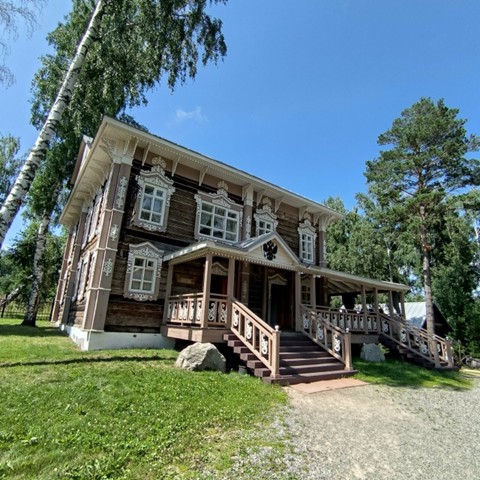
"Andreevskaya Sloboda" Historical and Architectural Complex
Address: 22 Breslavskogo St., Belokurikha city
Contacts:
Tel.: +7 (983) 170-89-63
Website: Page on the Belokurikha resort website
Opening hours:
- Tue–Sun: from 10:00 to 18:00
- Mon: Closed






📍Посмотреть на карте
[ ▶︎ ] Video Review
Brief historical background, collections and exhibitions of the museum
Status: Private museum.
In the early 19th century, the villages of the Bystroistoksky district, located along the Ob River, were actively trading throughout the Tomsk province and beyond. The number of wealthy merchants was growing. One of them was Ilya Fedorovich Andreev.
In 1822, in the village of Verkh-Anuyskoye in the Bystroistoksky district, he built a two-story house. On its logs, a signature, presumably of the master builder, "Mitros," still remains. And the merchant's eldest son, Ivan Ilyich, after a two-year journey through Europe, returned home and opened a tavern with Russian and German cuisine on the ground floor of the house.
The house has survived to this day; it was moved to a new location, and its exterior and interior were restored. Now it is the main object of "Andreevskaya Sloboda," which gave its name to the entire complex.
Andreevskaya Sloboda House-Museum:
The main object of the complex, which gave it its name. This is the relocated and restored two-story house of the merchant Ilya Fedorovich Andreev, built in 1822. The historical interior has been recreated inside.
House of Bread:
An object dedicated to the secrets of baking bread according to old recipes. The atmosphere of 19th-century life is recreated here with a real Russian stove and authentic kitchen utensils.
Locomobile:
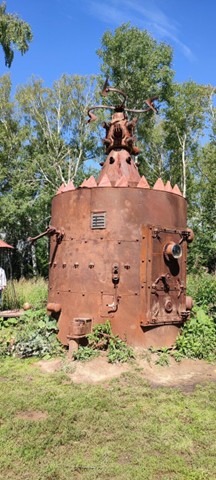
A restored steam engine that was once used in mines, factories, and agriculture to power threshers and mills. The unit was found in a remote village in the Altai Mountains.
The Smithy:
A working smithy with a forge and bellows, where 19th-century household items are forged. Visitors can watch the blacksmith at work and also try their hand at the craft.
Healer's House:
A house that recreates the dwelling and life of a herbalist-healer. Inside, you can see old icons, herbal collections, and ingredients for preparing medicinal potions.
The Barn:
A reconstruction of a traditional farm building for storing grain, also known as an ovin or zhitnitsa. The barn was not only a place for storage but also a place for performing rituals.
The Distillery:
A building where the production technology of bread wine – an ancient Russian alcoholic beverage, the ancestor of modern vodka, made from grains in the 15th-16th centuries – is recreated.

